
 Steve Bradley
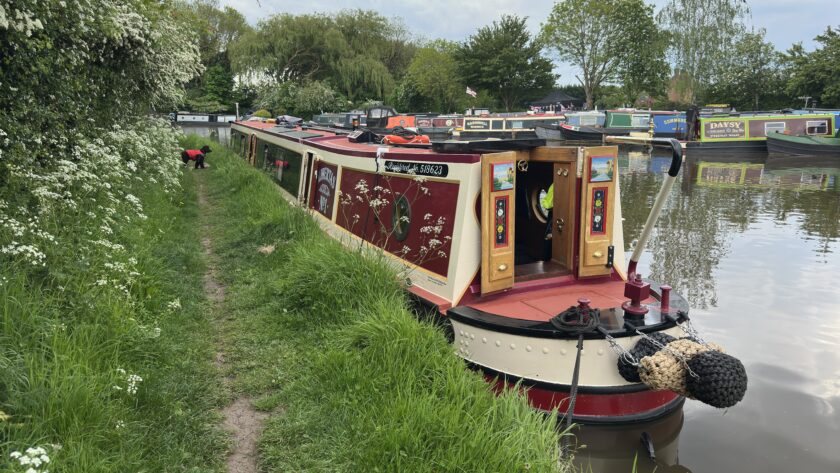
 After a few years living aboard SnowBear and sailing in higher latitudes, we’ve decided to make a significant change and transition to life aboard a narrowboat on the British canals and rivers.
Part of this decision has been shaped by a shift in lifestyle and priorities. While sailing in higher latitudes, much of our time was spent studying weather and ice reports to plan safe offshore passages, alongside the constant practical demands of operating in remote and often unforgiving environments. In the periods spent waiting for the right weather window to move on, we increasingly found ourselves drawn to a slower, more settled style of boating life.
Broader political and social currents have also influenced our thinking. Like many people, we’ve become increasingly uneasy with the growing polarisation and increasingly divisive tone in public life across many parts of the world. What we’re looking for now is a different rhythm: something quieter, more community-oriented, closer to home, and less shaped by the intensity and hostility that so often feels present in today’s wider environment.
Britain’s canals and rivers offer exactly that.
A short history lesson
Britain’s inland waterways form a transport network of several thousand miles of navigable canals and rivers. Today, the Canal & River Trust manages around 2,000 miles of canals and associated waterways in England and Wales, but the wider system also includes major navigable rivers such as the Thames, Severn, Trent, and Great Ouse, as well as Scotland’s separate canal network and others managed navigations that extend to around 4000 miles of navigable inland waterways.
Most canals were constructed by private companies and groups of investors, often made up of merchants, landowners, and industrialists who stood to benefit from improved transport links. Some of the major engineering work was led by canal engineers such as James Brindley, Thomas Telford, and John Rennie, who developed many of the standard methods used across the system.
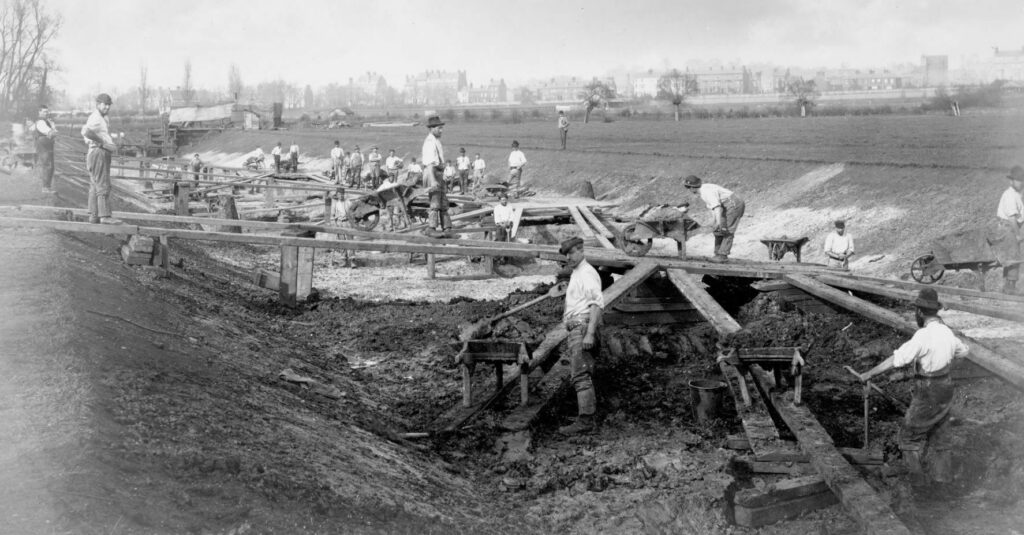
Construction was typically carried out using manual labour. Large workforces of navvies (navigational engineers) excavated cuttings, built embankments, and lined sections with clay or stone to make them watertight. Locks were built to manage changes in elevation, along with tunnels, aqueducts, bridges, and reservoirs to maintain water supply and route continuity across varied terrain.
The canals were designed to move bulk goods efficiently, including coal, iron, pottery, and other manufactured materials, between industrial centres, towns, and ports. Over time, they formed an interconnected national network that supported commercial transport across much of the country.
The decline of the system began in the 19th century with the expansion of the railways and later road transport. In many cases, the same companies that had invested in canal construction also developed railway networks, which offered faster and more flexible transport. As a result, commercial freight traffic on the canals gradually reduced and eventually ceased on most routes.
A completely different style of boating from offshore sailing.
Despite this decline, much of the network has remained intact for us to enjoy today. This reflects the durability and practicality of the original engineering and construction. Large sections are still operational today, with locks, bridges, tunnels, and aqueducts continuing to function as part of the navigable system.
Our progress will be measured in lock miles per day. Three miles an hour is typical cruising speed — essentially walking pace — and travel is slow enough to take in wildlife, architecture, and changes in the landscape, as well as to stop and talk with people on towpaths or at locks. Canal travel is more social, with more time spent engaging with places and people along the route.
Steve’s connection with the inland waterways goes back many years.
In the 1980s, he managed a boatyard in Shardlow, one of Britain’s best-preserved historic inland ports where the Trent & Mersey Canal meets the River Trent. Working there provided a lasting introduction to the canal system and a strong appreciation of its history and function.
Steve was responsible for managing a permanent canals exhibition and museum, focused on preserving and presenting the history of the waterways and their role in Britain’s industrial development. He also worked with the East Midlands Tourist Board to promote canal holidays across the region, encouraging more people to explore the network by boat.
The site also served as a valuable educational resource, with many schools visiting regularly to learn about canal history, industrial archaeology, engineering, transport systems, and traditional working life on the waterways. For many children, it was their first experience aboard a narrowboat or seeing historic waterway infrastructure in operation.
Steve was also responsible for a passenger narrowboat and a hire fleet, preparing boats for customers heading out onto the system each week. Watching people experience canal boating for the first time left a strong impression. Most adapted quickly to the slower pace of travel, and the change in rhythm was often immediate.
That experience left him with a long-term ambition to one day live aboard and cruise the canal network.
Finding the right boat
In the autumn of 2025 we began seriously searching for the right narrowboat.
We knew very clearly what we wanted (Mostly Steve as Sarah had never been on a narrowboat before). The boat needed to be traditional in style, with a mid-engine layout, and professionally fitted, with a strong emphasis on structure and engineering, evidence of being maintained, and a sensible interior layout for living aboard and entertaining guests.
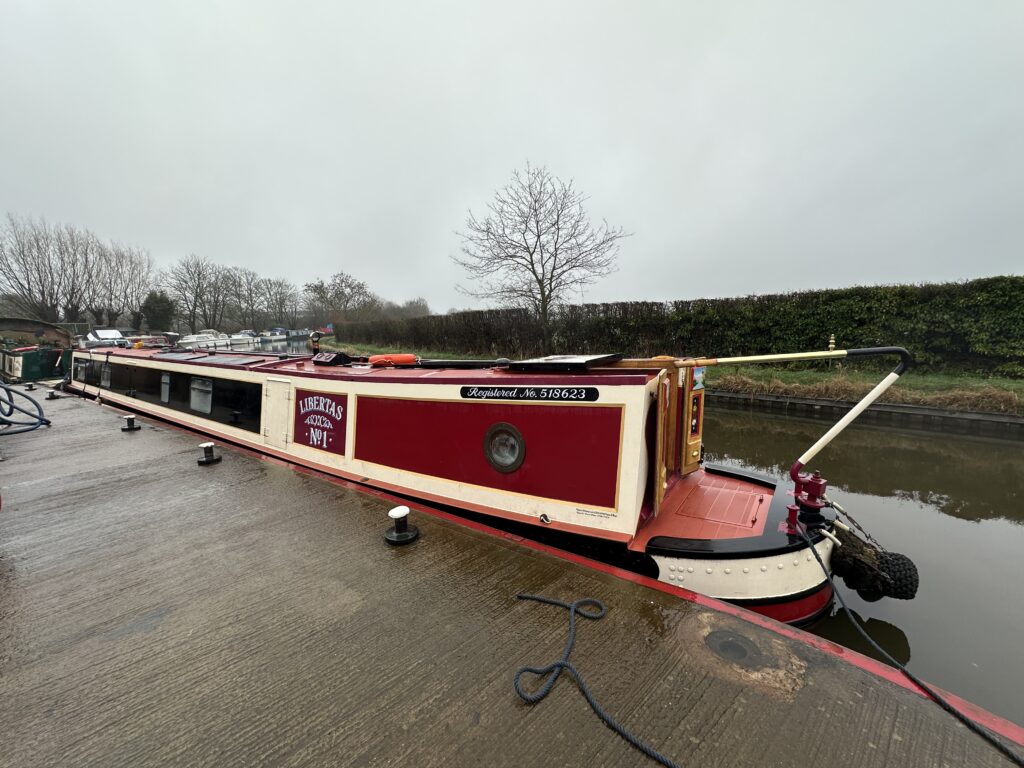
We were fortunate to find Libertas, a 70-foot 2009 Steve Hudson built narrowboat, unusually powered by a Russell Newbery DM2 engine.
For those unfamiliar with Narrowboat engines, the DM2 is something rather special. It is a traditional slow-revving two-cylinder diesel based on classic British industrial and working boat engine designs. Unlike many modern marine diesels, the DM2 is entirely mechanical in character and operates at very low engine speeds with enormous torque.
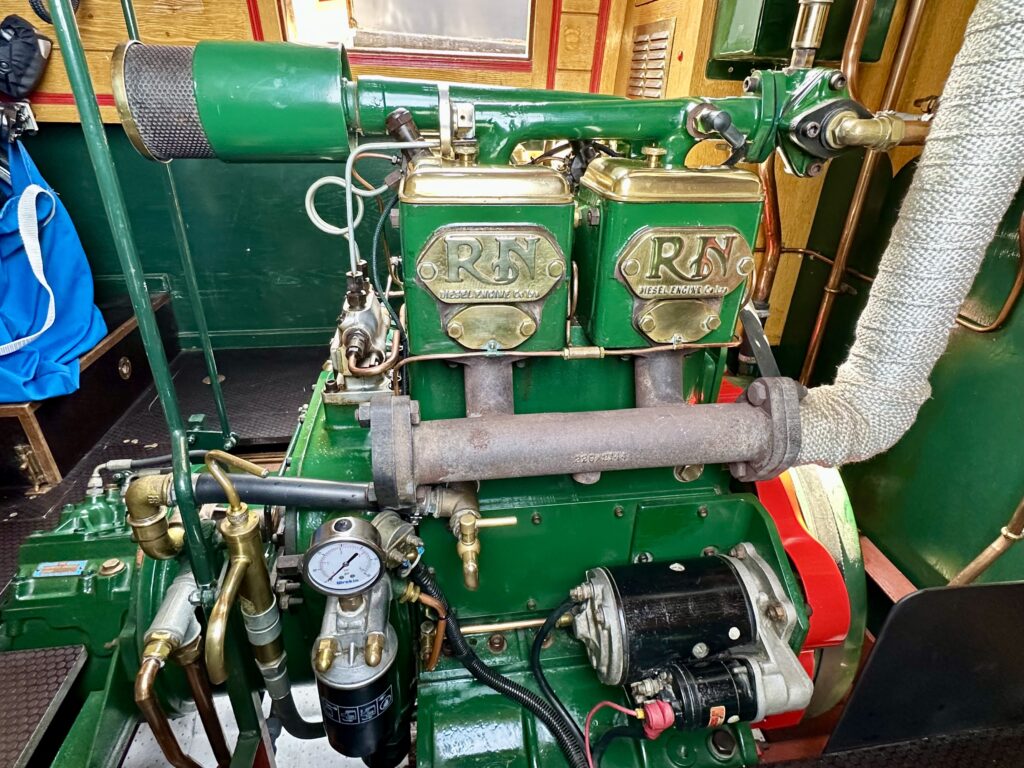
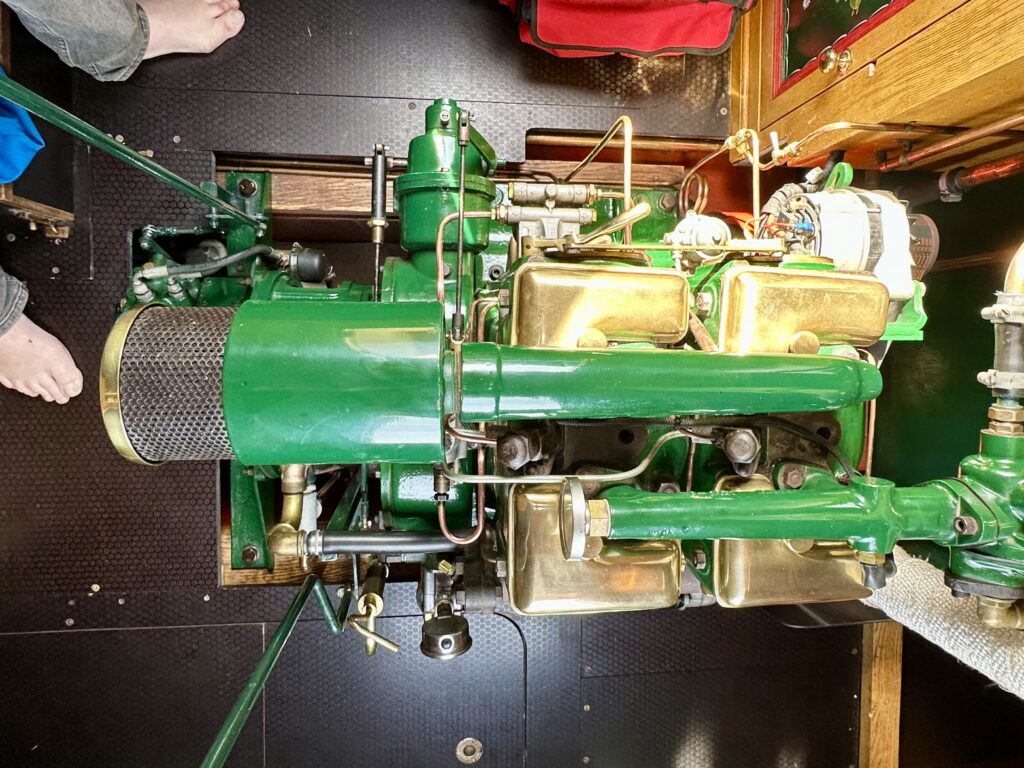
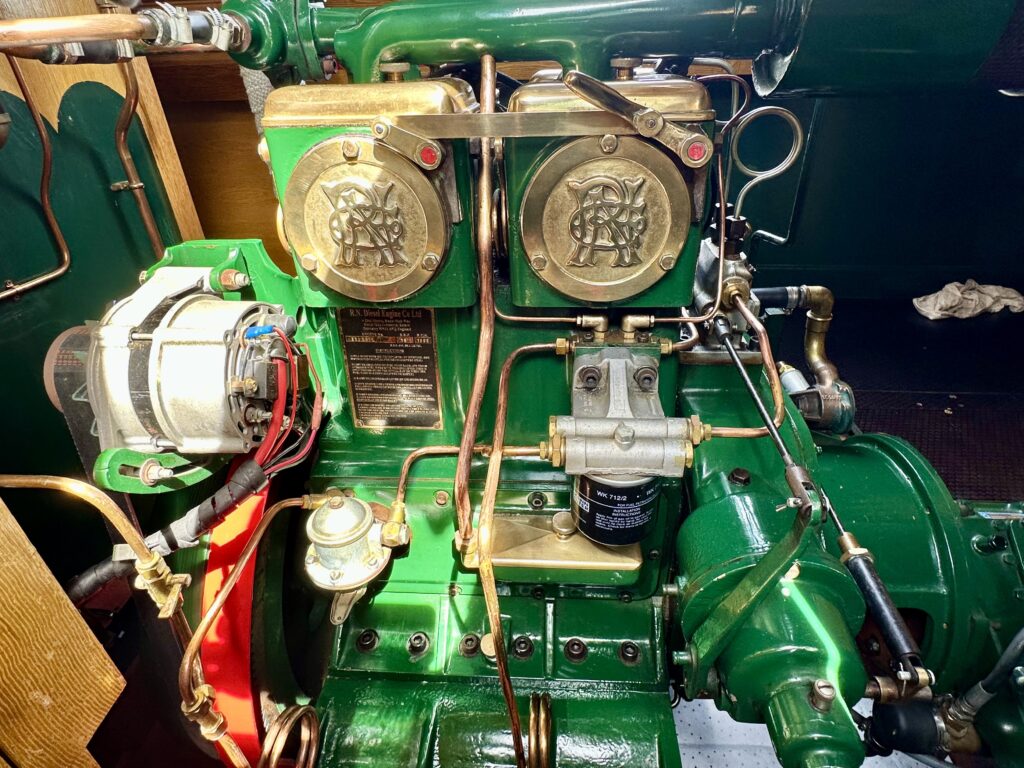
It is also famous for its sound – The slow rhythmic beat of a DM2 has become closely associated with traditional canal boating and historic working boats. Many enthusiasts consider it one of the finest engines ever fitted to a narrowboat.
From a practical perspective the engine is also robust, accessible, rebuildable, and designed to last for decades with proper maintenance — all qualities we value highly.
The rest of the boat matched the engine equally well. The Steve Hudson shell is exceptionally well regarded: the steelwork and fit out are both to a very high standard, and the boat was already equipped with comprehensive Mastervolt electrical systems and a Mastervolt generator.
The oak wood interior with an offset interior layout works particularly well for long-term live aboard cruising. There is generous guest accommodation and even a second toilet serving the aft cabin, which makes extended visits from friends and family considerably easier.
Following a successful survey in December we immediately arranged for the underwater hull to be grit blasted and blacked at Kings Bromley Wharf to establish a good maintenance baseline from the start.
Then, on Christmas Eve, we made our first short voyage aboard Libertas to Streethay Wharf near the cathedral city of Lichfield.
Since then, we have spent four months carrying out a wide range of refit and upgrade projects. With the help of Streethay Wharf and Lockgate Stoves, this included converting the Morsø Squirrel stove to run on diesel – no more messy coal for us:)
Steve has worked through virtually every onboard system, upgrading the freshwater system, improving the heating installation, replacing the obsolete Mikuni heater with a Webasto Thermo Pro 90, redesigning the solar installation by splitting 800 watts across five arrays, and three controllers to reduce the effects of shading, refitting all the galley appliances, various electrical system improvements, and servicing al the mechanics.
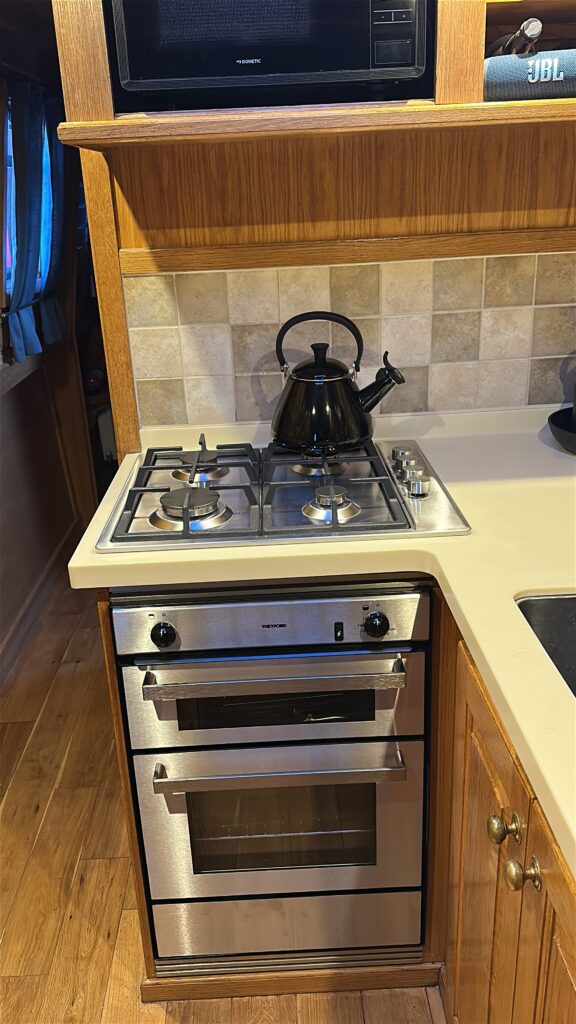
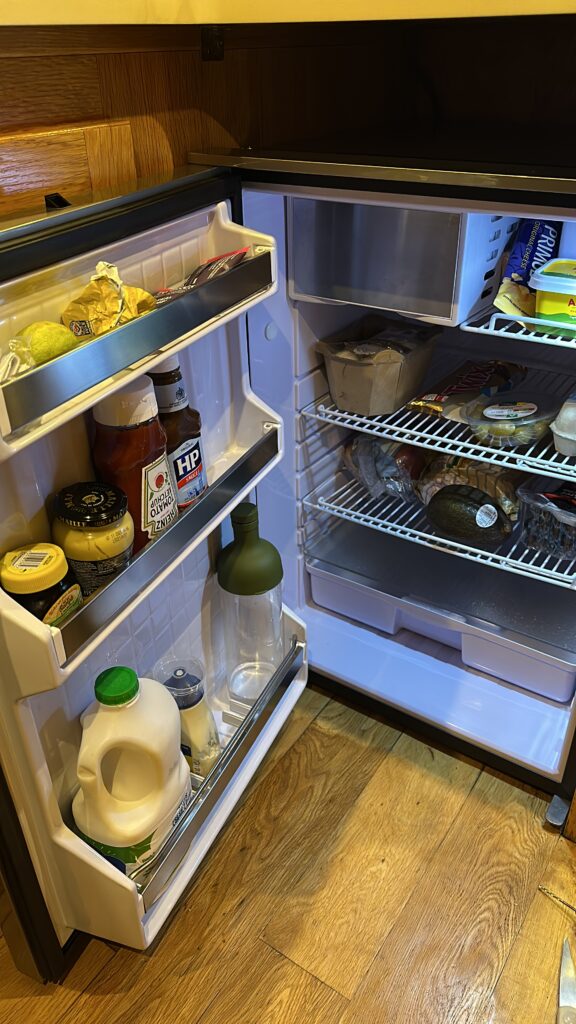
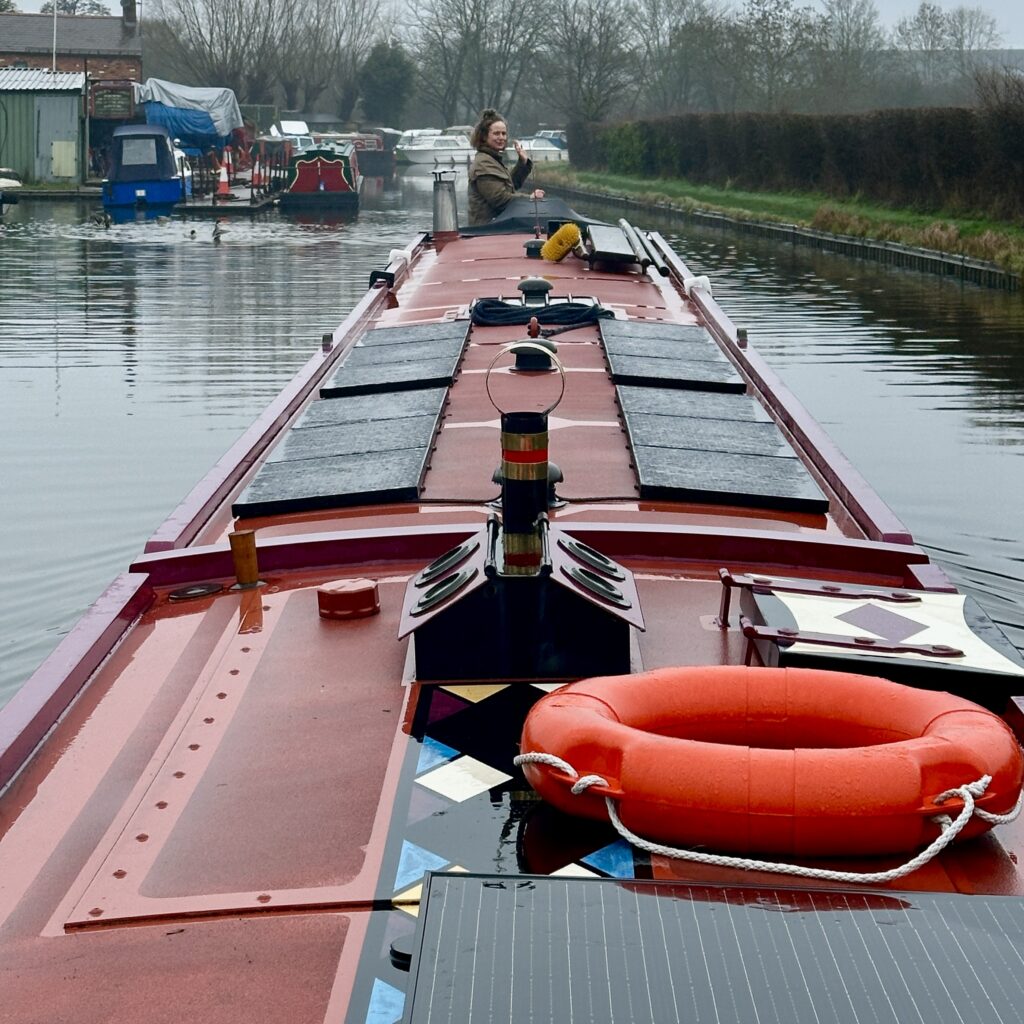
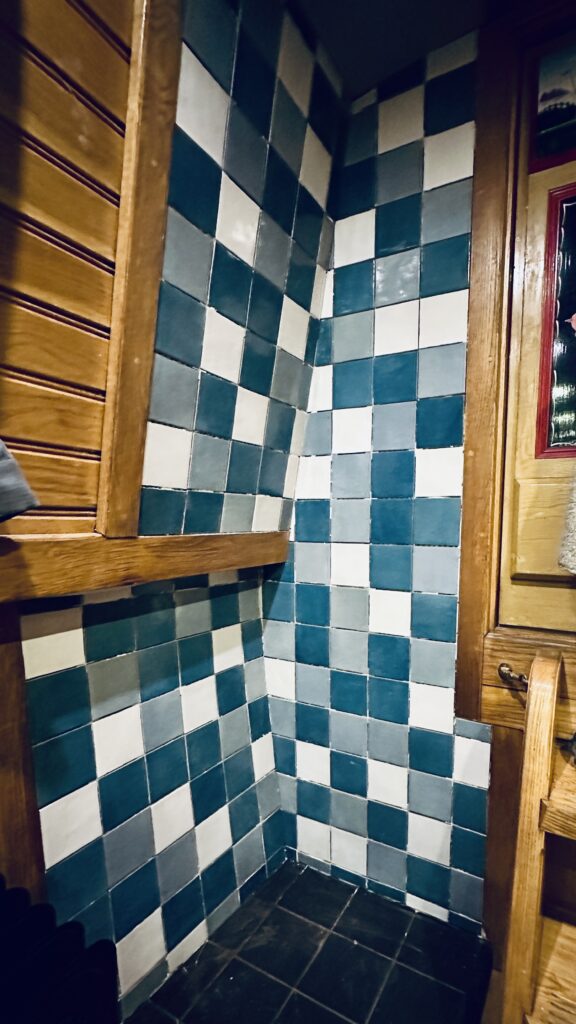
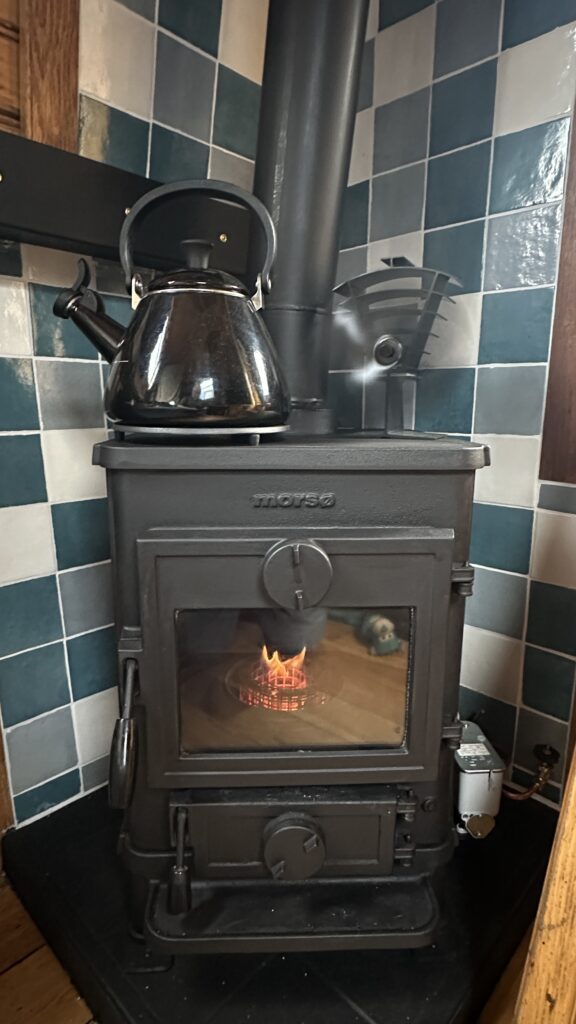
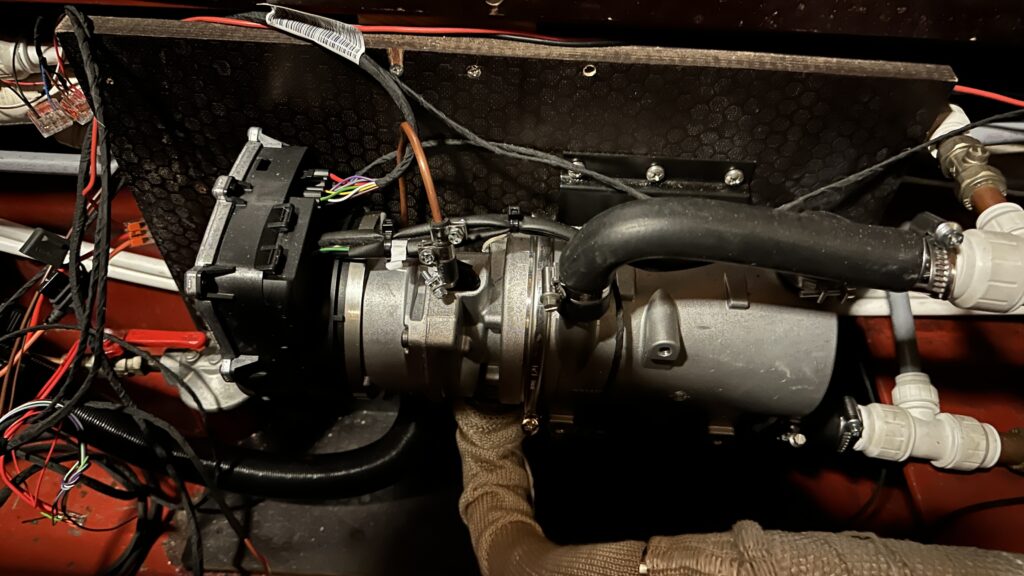
We have now ticked off everything on the original project list and have almost found spaces for all of our equipment and possessions. Like any live aboard vessel, however, the boat will remain an ongoing project, with continual maintenance, improvements, refinements, and engineering work still to come. Fortunately, Steve has the skills to take on whatever is needed.
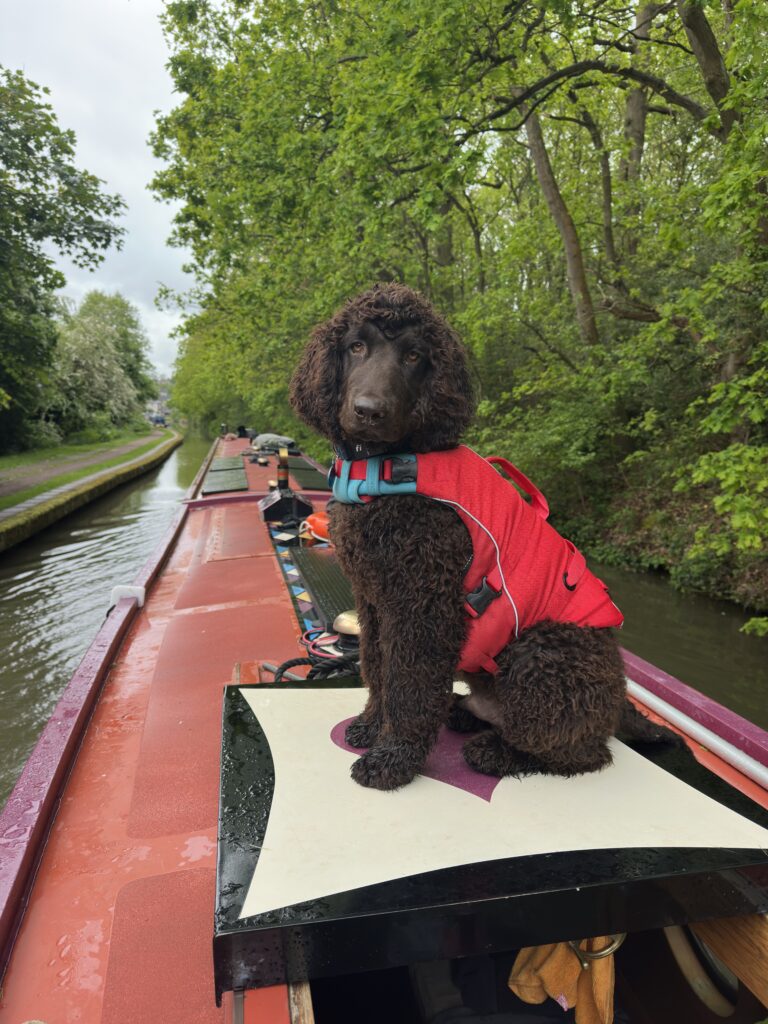
We are also joined by a new crew member, Finnegan, our Irish Water Spaniel, who appears to have adapted to canal life remarkably quickly. Towpaths, locks, muddy banks, and passing dogs, animals, people and boats all seem to meet with his enthusiastic approval.
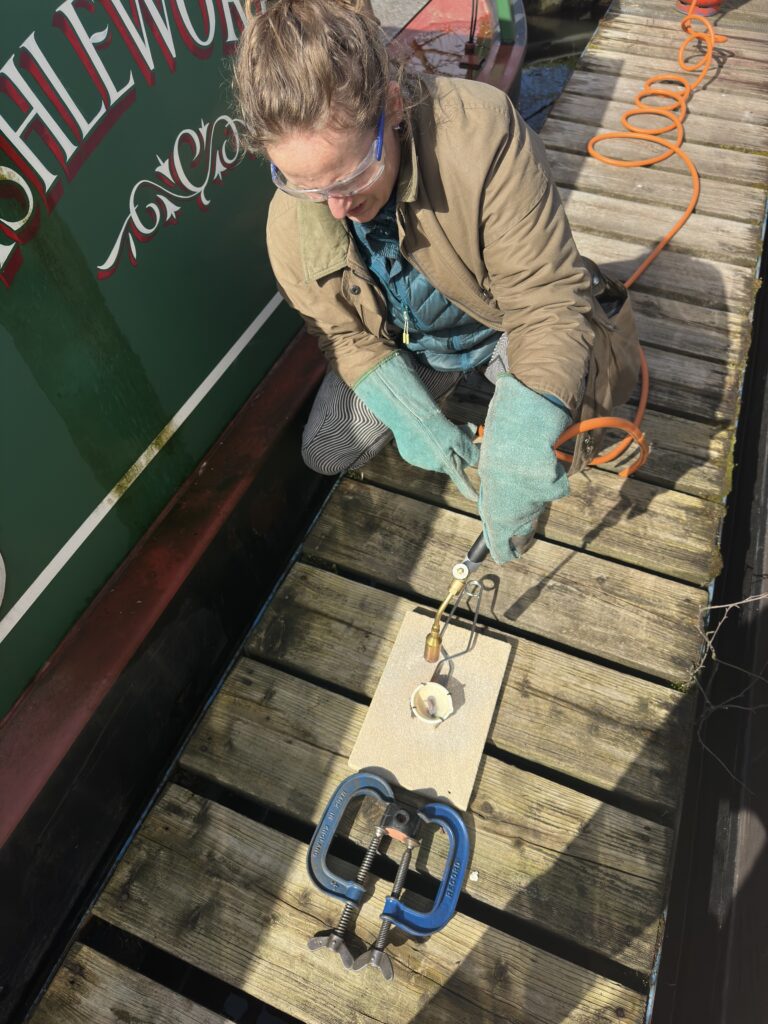
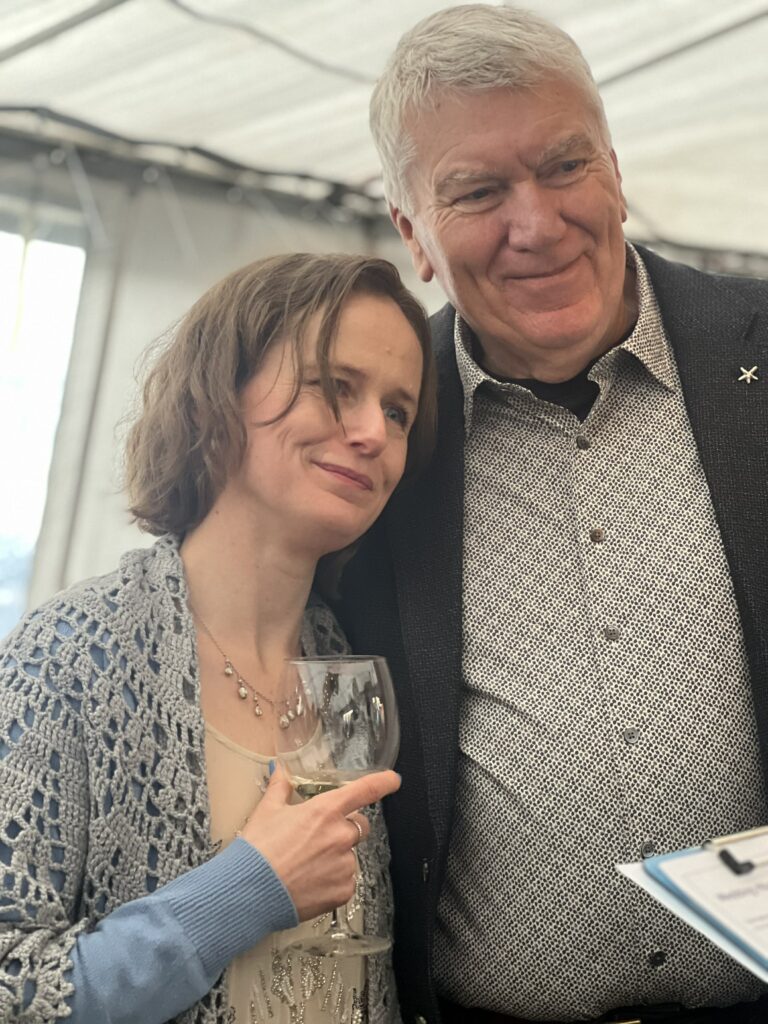
Alongside the boating changes, Sarah has continued developing her jewellery-making skills, including crafting her own wedding ring before our very special wedding in February aboard the historic vessel Wotan moored in Nyhavn Copenhagen. An entirely appropriate setting given how much of our lives have revolved around boats and maritime history.
But won’t you miss sailing?
We get asked this question a lot and we are certainly not leaving sailing behind completely, Snow Bear is on the market but not yet sold so we may spend some time this summer on the west coast of Scotland.
Perhaps more importantly our offshore, live aboard and high-latitude sailing experience are not something we intend to abandon entirely. We still intend to look for opportunities to sail and help others with their sailing. We are available for anything from consultancy to crew and we will probably charter in some of the locations on our wish list if we can find suitable craft.
Please get in touch if you are planning something that you think could be of mutual benefit.
Now we are bona fide continuous cruisers
Unlike ocean sailing you need a licence to keep a boat on Britains inland waterways. Licensing is a little complex: with business and private licences, different licences needed for different waterways and different licences for those who want to keep their boat in a marina, and those who want to explore the Canal Network and have no need for a permanent mooring (simply known as “Continuous Cruising”). Our plan is to continuously cruise aboard Libertas.
Our Canal & River Trust licence requires that we are undertaking a bona fide navigation, in other words a continuous journey – meaning that we are not going back and forth along the same section of canal. It allows us to moor without charge, usually on the towpath side of the Canal for up to 14 days (or a shorter marked duration in more popular visitor locations) anywhere along the network. It also gives us access to fresh water, waste disposal, and other a few other services along the way. If we need to stay in one place longer, or leave the boat for a while, we will simply pay for a mooring in a commercial marina for whatever duration we require.
For us, this flexibility is one of the major attractions, we simply move our floating home through very different parts of the country. One week we may be moored in open countryside, the next outside a historic industrial town, and later beside woodland, rivers, villages, or city centres.
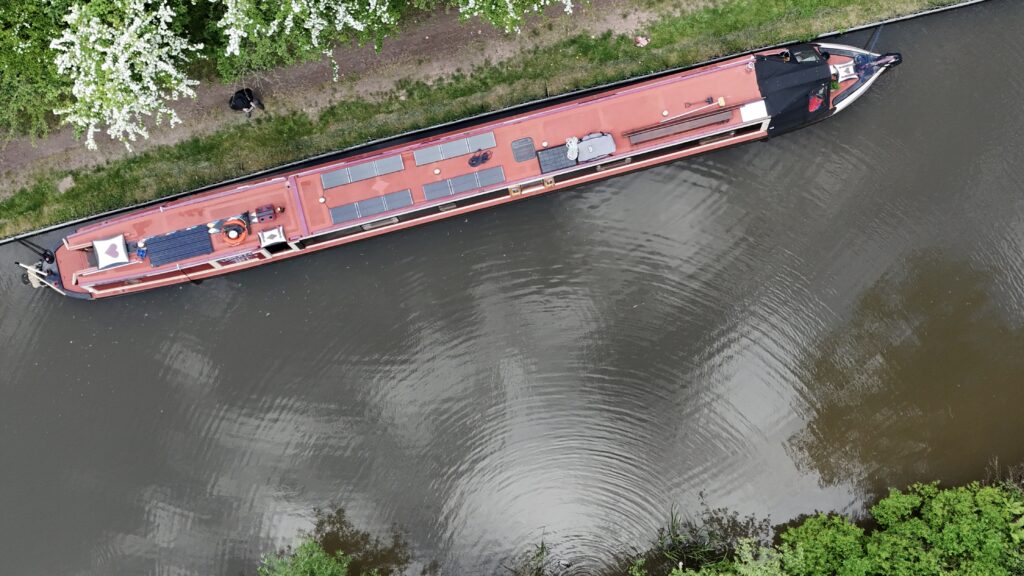
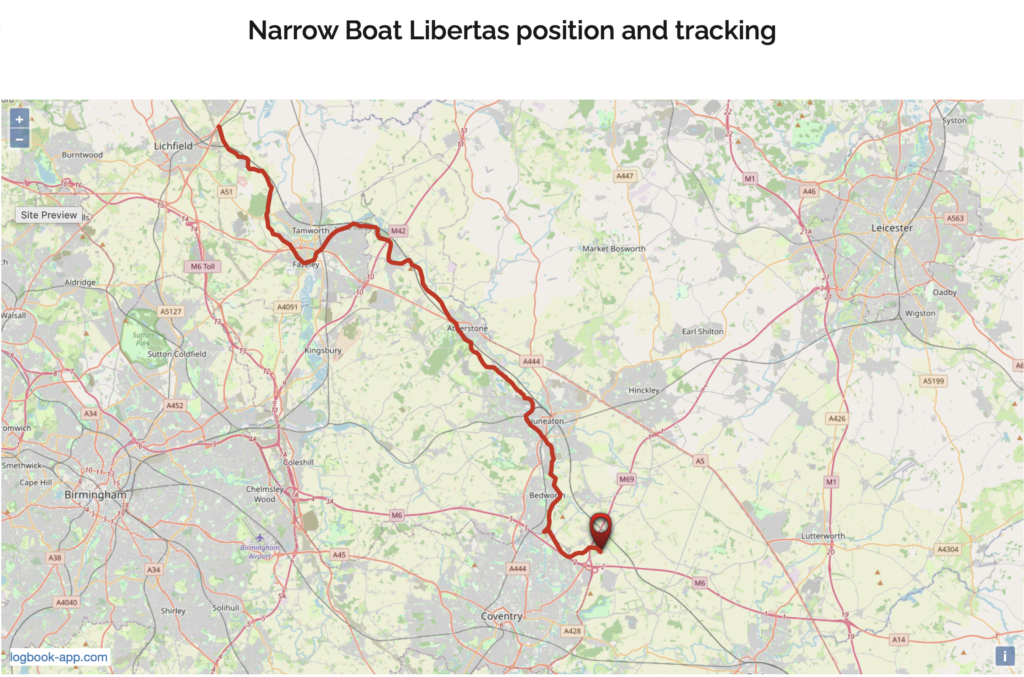
We have now started this journey and have left the mooring we had at Streethay Wharf and our first major destination will be the Crick Boat Show. Our live tracker is now up and running on the home page of our website.
Discover more from Snow Bear Adventures
Subscribe to get the latest posts sent to your email.
What fun! The boat looks fantastic (and I lurv that engine). You guys are going to have a grand time.
Finnegan looks like a real character, the perfect hound for the canal lifestyle.
Thank you David! Are you still in Brazil? Steve is also excited about the engine.
Finnegan is really doing well running around on the top of the boat and barking at dogs on land 🐶
Congratulations on your recent marriage! I look forward to getting updates on your latest adventures. The boat looks terrific and should provide a first class way to travel. Keep in touch.
Thank you so much🤩 it is such a different way of living but so comfortable 😄 So glad to hear from you and say hi to everybody. hope you are all doing well❤️
By the way it was Sarah writing from Steve’s iPad😀
All is well over here. We just returned from a Viking ocean cruise to Norway, Sweden, Denmark, Poland, Germany & Estonia. Such a beautiful area. I can certainly understand your love of the ocean, even though we take a much less adventurous approach. Although, we’ve booked a Viking expedition to Antarctica for December 2027. I can’t wait to explore down there in their submarine, kayaks and Zodiacs. The ship has 30 scientist that are doing research and providing lectures, which should be very interesting. Next month we’re going out to visit Brian and his family in Washington. Meghan and her family are coming, too. We rented a beach house on the Pacific Ocean for a week. It’s the first time all 11 of us will be together since our Alaskan cruise a couple of years ago.
It sounds like you are having a great time🤩 The coast of Norway is fantastic – how long does a cruise like that take?
I would love to go to Antarctica at some point, so I think you will have a great time. We still hope to sail at different locations but it feels good to slow down a bit.
It is great that you are all going to meet up. Say hi to everyone. I can imagine it can be difficult when you live so far from each other 🤗
Our cruise was 13 days. There is so much history and beautiful places to see that we could have spent much longer, but 13 days was enough to get a little taste of the area.